






 Uncut Radio


Africa Creator Economy Report: Market Hits $3.4B Amid Severe Payment Gaps
Africa’s biggest media story right now is the rise of independent creators building audiences and income outside traditional TV and film.
According to Coachli’s 2026 creator economy report, Africa’s creator economy reached $3.4 billion in 2024 and is projected to hit $7.2 billion by 2026.
Nigeria holds 40% of that value, South Africa 22%, and Kenya 15%, with Ghana, Egypt, and Morocco making up most of the rest.
The number of people doing this professionally has nearly tripled.
According to the same report, Africa’s active creator base grew from 2.1 million in 2022 to 4.8 million by 2024, a 128% growth rate that far outpaces the global average of 67% over the same period.
Mobile-first, short-form video is driving most of it, with the report noting 89% of content is now consumed on smartphones and tablets.

Africa Creator Economy Report, ; Monetization Gaps
Making money from an audience isn’t the same everywhere.
Spondula’s research on creator payouts, Kenya has access to the YouTube Partner Program, but TikTok Creator Rewards remain excluded.
Kenya’s advantage is M-Pesa, which gives creators a mobile-money rail that most global payout systems don’t offer.
The TikTok monetization gap runs across most of the region.
Sub-Saharan Africa’s largest markets, including Nigeria, Ghana, Kenya, and South Africa, still lack Creator Rewards Program access.
Right now, the more reliable income paths are LIVE gifts and direct brand deals, which often outperform platform payouts per hour of effort.
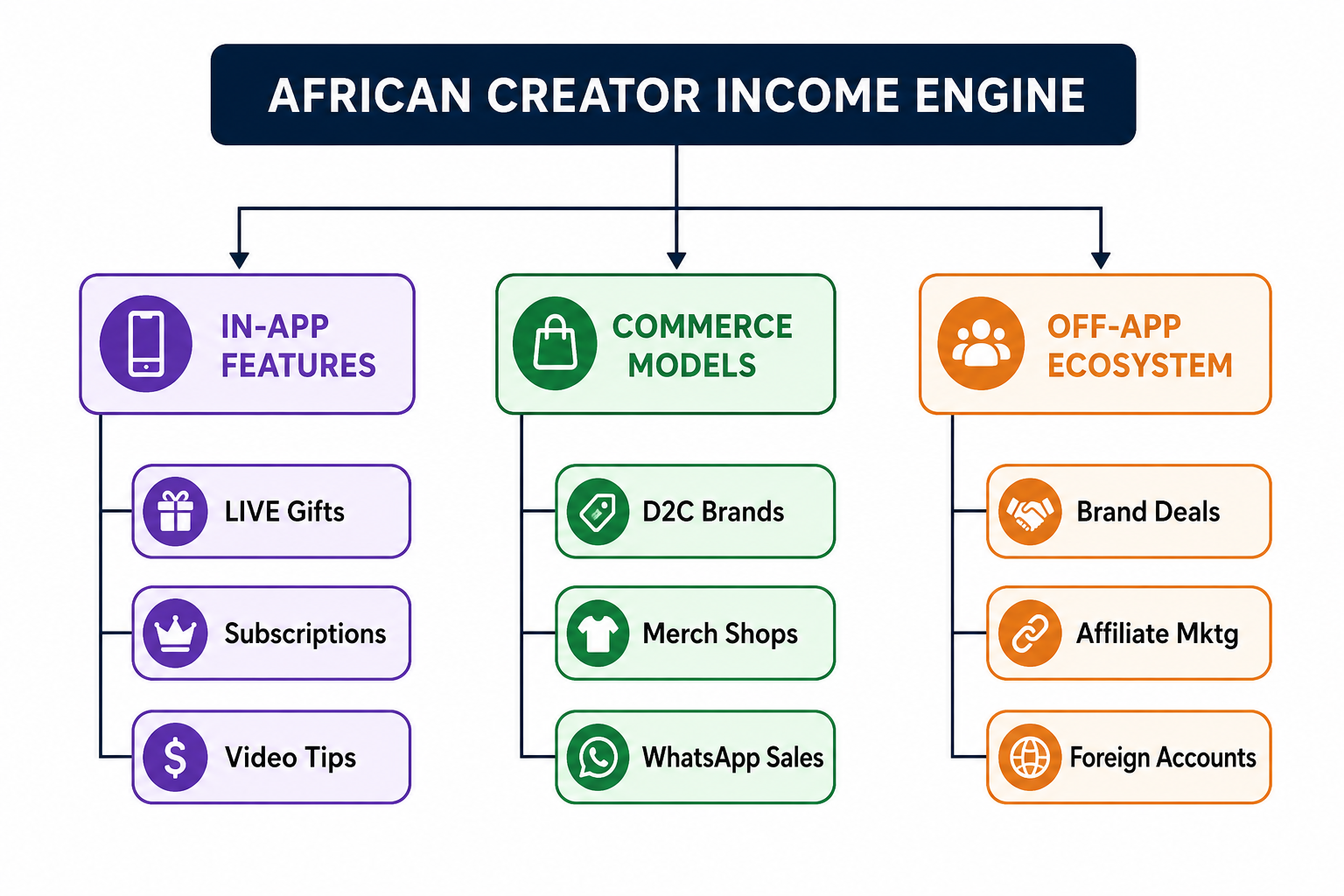
Successful creators aren’t relying on one platform or one income stream.
The most sustainable creator businesses combine multiple monetization strategies rather than depending on ad revenue alone.
Digital products and online courses generate the highest per-creator revenue, averaging $4,200 annually for active course creators, followed by coaching and consulting at $3,800 per year.
Collaboration across borders also pays off.

Nigerian creators collaborating with South African and Kenyan creators see average revenue increases of 89% compared to single-country strategies, reinforcing that pan-African audiences, not just local ones, are where the bigger money sits.
A Kenyan Platform Is Betting on Local Ownership
One new entrant is targeting the monetization gap directly.
According to Kenya Insights, a Kenyan-built platform called UrbanTok launched with its CEO describing it as a monetization engine that happens to stream video, not a content platform with monetization added later.
Over 20 African ICT ministers attended the launch, including Kenya’s own Cabinet Secretary.
The framing behind it goes beyond one app.
According to the same coverage, officials described the platform as a matter of digital sovereignty, aimed at keeping African data, attention, and creator earnings inside the continent instead of flowing to foreign servers.
Local Language & Commerce Are Driving Engagement
Authenticity is translating directly into performance.
Contemeleon‘s 2026 creator economy analysis, a Swahili-first rural campaign in Kenya saw a 45% increase in engagement compared to English-only messaging.
Social commerce is following the same pattern, with live shopping in some markets selling out limited-edition collections in under 10 minutes.
Three shifts stand out for anyone creating content in Africa right now.
Audience growth is outpacing platform monetization tools, which means diversifying income early matters more than chasing views alone.
Cross-border collaboration pays measurably better than staying local.
And new, Africa-built platforms are starting to compete on payment infrastructure and revenue-sharing, not just content libraries.

READ: The Big Screen Is Full. Kenyan Stories Need More Screens